By Jose Antonio ChapmanPérez
I admit –in almost 25 years of work in the exciting world of chronicles, comments and news reports- not having paid enough conscious attention to the photoreporter’s work.
Photoreporters are artist who perceive, fix and illustrate daily life with objectivity for the sake of the world tangible picture. We should agree then to echo the legacy of José Martí, our national hero, when he stated: “The opportune compliment fosters recognition”.
Acknowledgement stirs up imagination when checking firsthand the surpassed lyricism in the vital support of the image to a news report, an interview, or a chronicle; and in a photographic exposition.
Without fostering Chauvinism, in Holguín there are excellent press photographers. I would include Elder Leyva, Yusleidis Socorro, both of the weekly paper Ahora!; Juan Pablo Carreras from the Cuban News Agency; Amauris Betancourt, from Radio Angulo Digital; Juan Miguel Cruz, from the national weekly sports Jit. Of course not leaving out the TV cameramen from the local Tele Cristal broadcasting station.
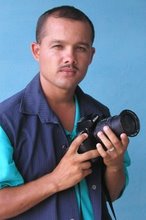
Amauris, with a highlighted work despite his youth, is able to deliver a truly photographic gift where life is turned into news stories. His originality towers itself over criticism and undue diatribe. He is only small physically.

These arguments backs up the objective praise in the full-of-life photo exhibit “Holguín: 50 Years of Revolution” at the CMKO Radio Broadcasting Station's gallery, where it can be appreciated.
Juan Miguel is another lens talent maker of wonders, and is currently making sports photography; but he goes in too for nature photography besides daily photojournalism.

The approach to this assessment comes true at Radio Angulo's Web site, where both professionals add pictures to different news genders in the published works.
It is written and spoken of professions frequently and at times conventionaly, but very little is said about photoreporters. I just want to pay humble homage to this beautiful memory-perpetuating work.

 By Amauris Betancourt.



 His steady hand holds up the scissors. His sight, 20x20, can not be better. He has never worn eyeglasses. Some neighbors have him help threading needles. The oldest active barber in business in Cuba; maybe in the whole world, but it is difficult to say.


